Protecting the Goats You've Worked So Hard to Choose
You've done the research on genetics, health testing, and finding the right breeder. Here's the part of goat ownership most people don't think about until it's too late.
If you have goats (or are getting them soon), you’ve probably already thought about predators. Maybe you’ve heard stories. Maybe you’ve done the fencing research. Maybe you figure your property is safe enough.
This page is for every goat owner who’s asked the question — and for every one who hasn’t yet but should. We’re going to walk through what a Livestock Guardian Dog actually does, whether it’s right for your setup, and what to consider before you decide.
Predators Are a “When,” Not an “If”
You already know that good goats don’t just happen — they take research, relationship, and investment. But keeping them safe? That part often gets left until after something goes wrong.
Predators don’t check your fencing schedule. Coyotes, neighborhood dogs, foxes, and raptors are active in suburban and rural areas at rates most people don’t realize until there’s a loss. Even well-fenced properties aren’t immune.
The goat owners who sleep well at night share one thing: they set up livestock protection before they needed it, not after.
The Difference Between Good Fencing and Real Protection
Good fencing keeps your goats in. A Livestock Guardian Dog keeps predators out.
That’s not a knock on fencing — you need both. But fencing is passive. A well-bred Livestock Guardian Dog is active: patrolling perimeters at night, responding to unfamiliar smells and sounds, and placing itself physically between your herd and anything that shouldn’t be there.
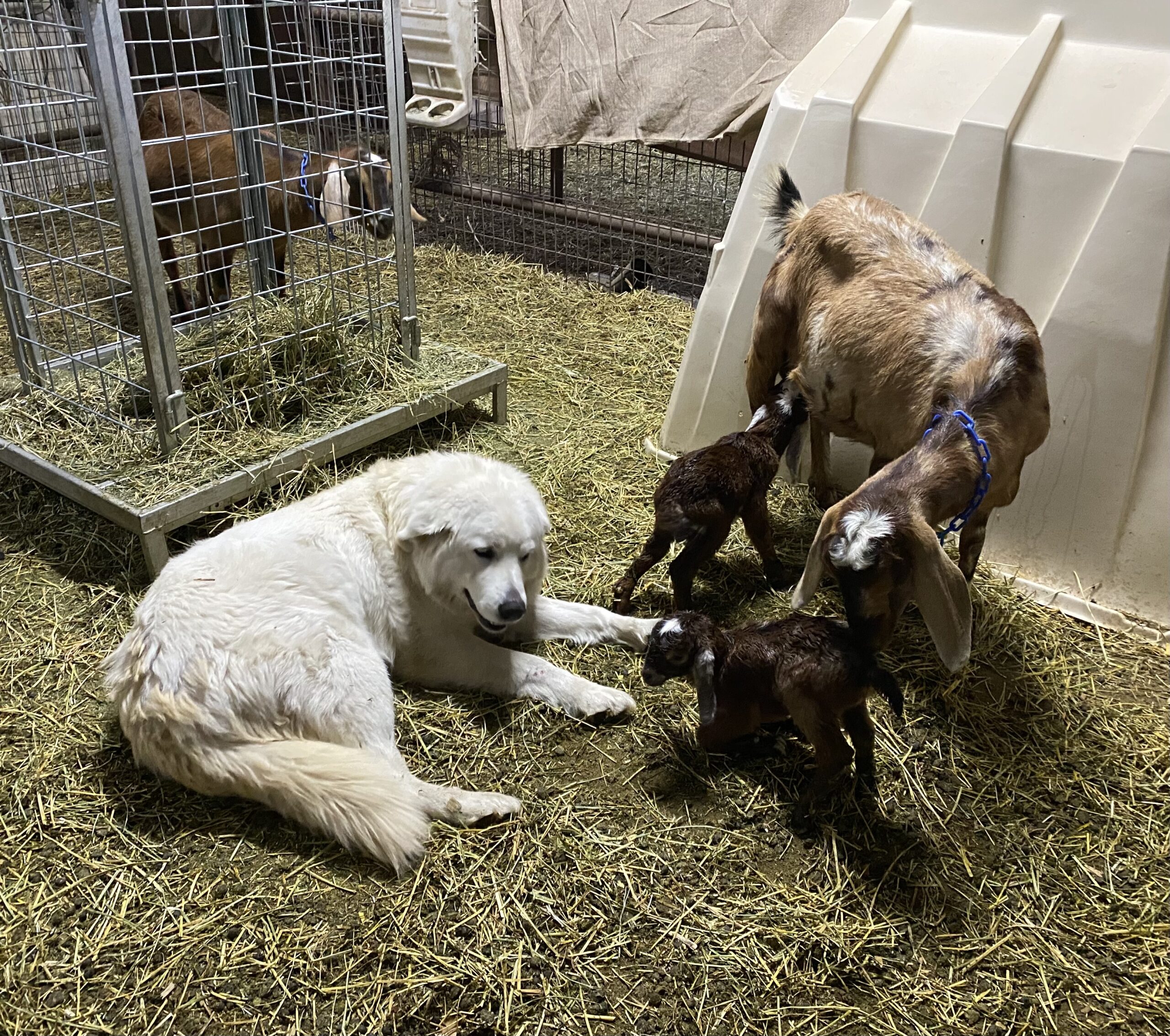
They don’t need to be commanded to guard. That instinct is bred in and reinforced through proper early socialization from 3-12 weeks of age. What they need is the right genetics, the right socialization, and an owner who understands how they work.
There Are Two Kinds of Goat Owners — and You Get to Choose Which One You Are
In nearly a decade of breeding goats and dogs, I’ve noticed a pattern. When it comes to predator protection, there are always two types of goat owners.
The first type thinks about predator protection before their goats come home. They ask the right questions, set up the right systems, and go to bed at night with reasonable confidence that their animals are protected.
The second type thinks about predator protection after something goes wrong. Maybe it’s a missing chicken that turns into a missing goat. Maybe it’s a clear morning when the pen is too quiet. They get a Livestock Guardian Dog — but they carry the memory of what they couldn’t prevent.
There’s no judgment here. Most people fall into the second category, not because they didn’t care, but because no one told them to think about it early. That’s what this page is for.
What a Livestock Guardian Dog Actually Does — and How It’s Different From a Regular Dog
A Livestock Guardian Dog isn’t a herding dog, a watchdog, or a pet that happens to live outside. It’s a specific type of working dog — typically a large, ancient breed — bred specifically to bond with and protect livestock.
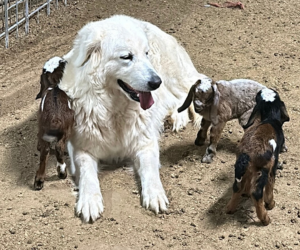
The key difference is this: herding dogs move animals. LGDs bond with them. An LGD lives with your goats, sees them as family, and responds to threats instinctively — barking to deter, patrolling perimeters, and placing themselves physically between your livestock and danger.
They don’t need to be trained to “guard.” That instinct is in the breed. What they need is the right socialization, the right introduction to their livestock, and an owner who understands how they work.
Common LGD breeds include:
- Maremma Sheepdog (Italian origin — what we raise at Prancing Pony Farm)
- Great Pyrenees
- Anatolian Shepherd
- Kangal
- Akbash
Each breed has its own temperament and working style. Our focus is Maremmas — we’ve placed 200+ over nearly a decade — but the principles apply across breeds.
What We Use on Our Farm — and Why It Started With a Dog Named Olaf
I didn’t plan to become a Maremma Sheepdog breeder. I became one because of what a Maremma did for my goats.
When I brought Olaf home, I was a goat person first. I knew I needed predator protection, but I wasn’t sure what the right answer was. Olaf answered that question. His bond with the herd, his calm-but-serious presence, the way the goats settled with him nearby — I knew almost immediately that this was what we were missing, and that other goat owners were missing it too.
That’s why I started breeding Maremmas. The two programs have always been connected — our goats exist partly because our puppies need to be raised around livestock to do their jobs well. And our Maremmas exist because our goats needed protection we couldn’t provide any other way.
Want the full Olaf story? Read it here →
A Symbiotic Relationship
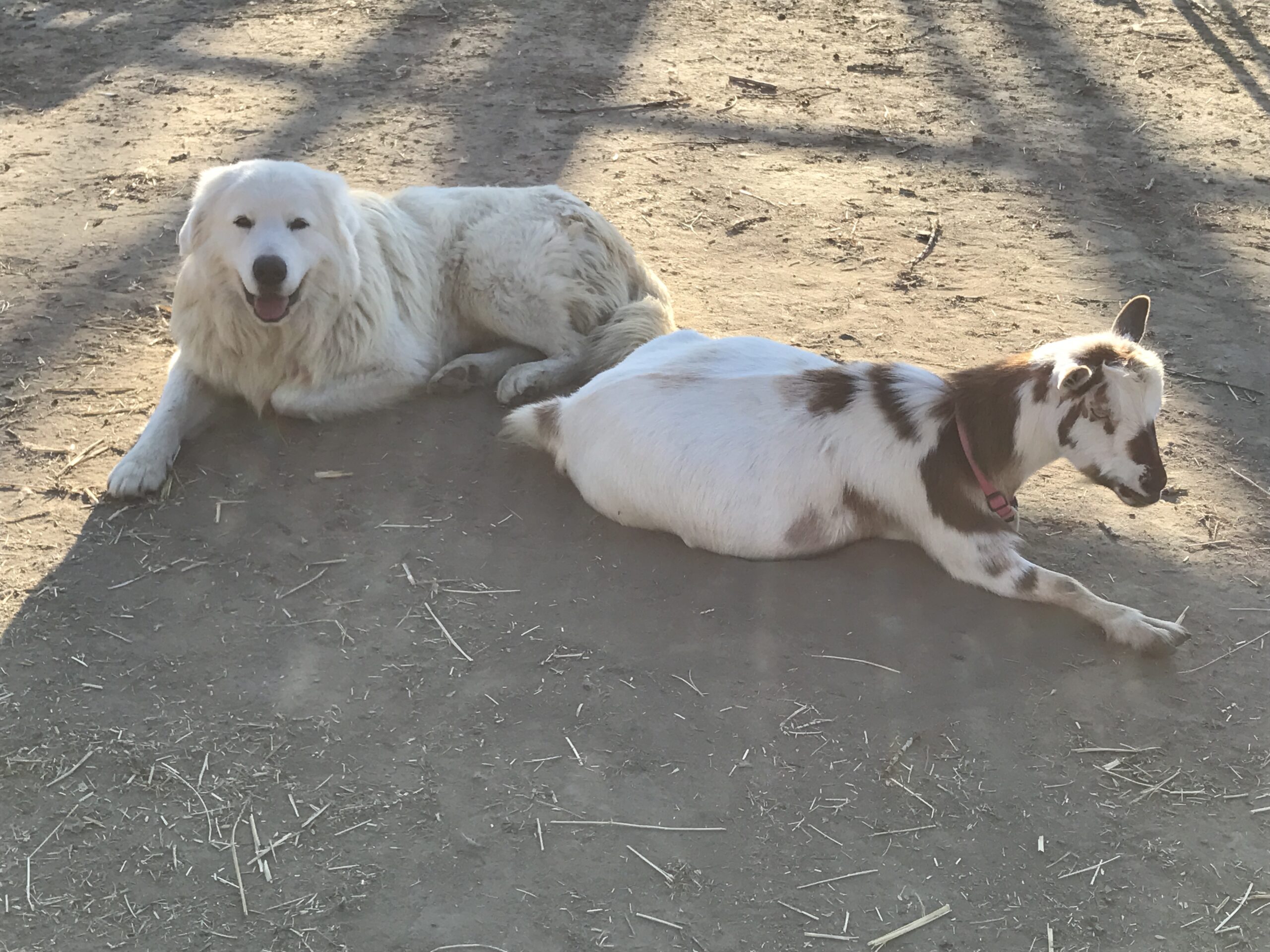
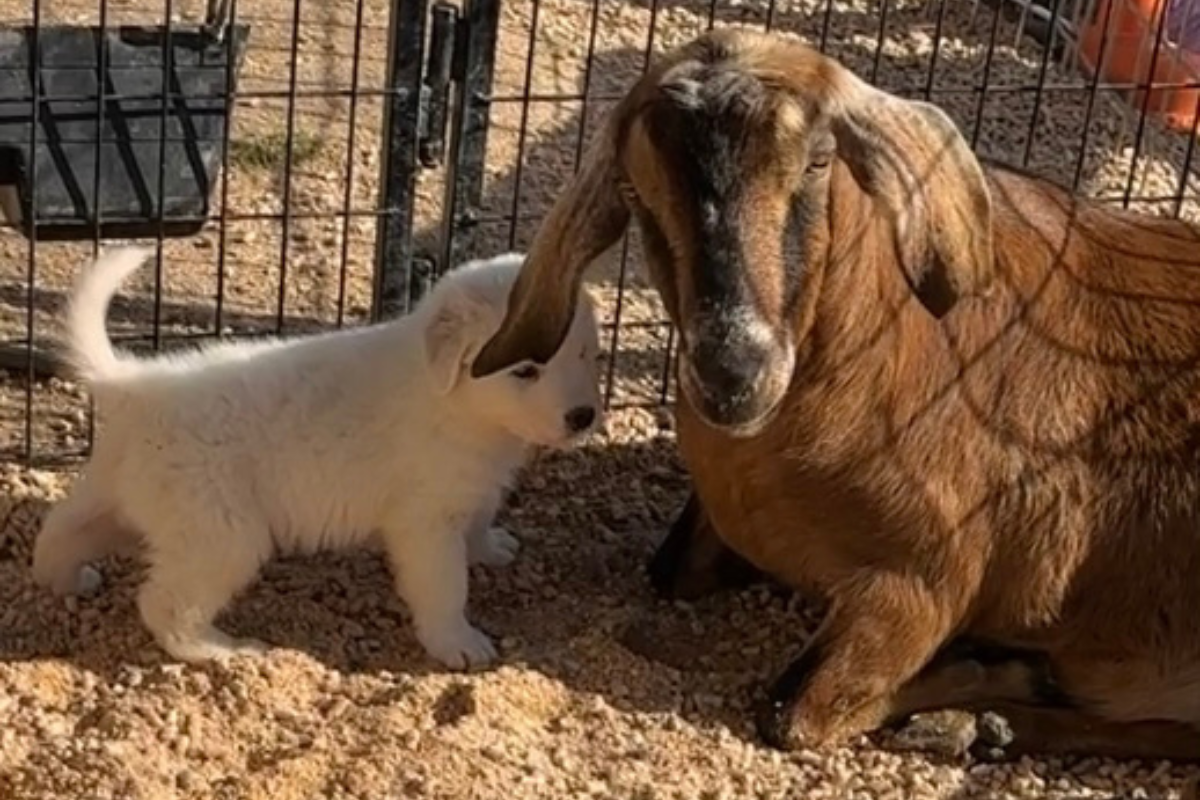
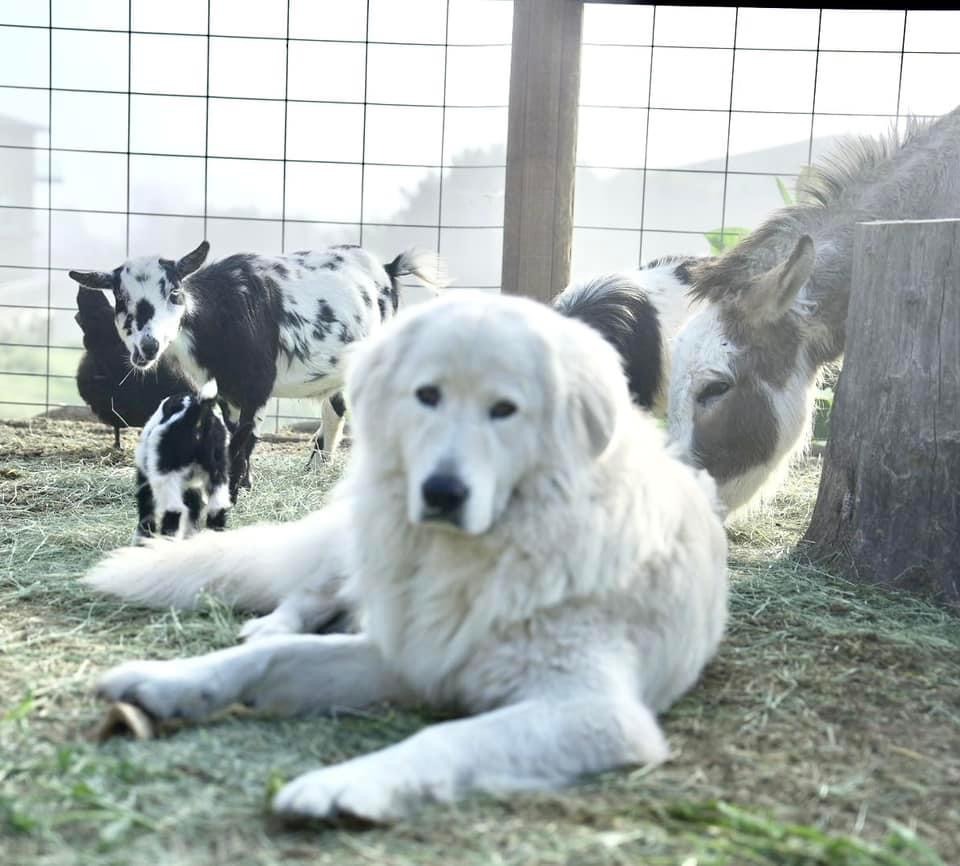
Our Maremma puppies are raised alongside our dairy goat herd from their earliest weeks. It’s how they develop the livestock bond that makes them effective guardians. Our goats are safer because of the Maremmas. Our Maremmas are better dogs because of the goats. The two programs have always been genuinely connected — not just cross-marketing.
We’ve placed 200+ Maremmas across the U.S. and Canada over nearly a decade, working with farms, homesteads, and first-time LGD owners. We’re also a KPA Certified Training program, which means you get professional support — not just a puppy and a handshake.
Learn more about our Maremma breeding program below:
Is a Maremma Sheepdog Right for Your Farm?
Honest answer: not for everyone. Here’s how to think through it:
A good fit if you:
- Have at least a few goats (or other animals) with any level of predator pressure in your area
- Can provide adequate outdoor space for a large working dog
- Have secure fencing (whatever keeps your goats in will work for your Maremma)
- Are prepared for an independent-minded, large-breed dog who bonds to your livestock
- Want professional training support as part of the deal
Worth waiting on if you:
- Are a long way away from getting your goat setup established
- Have neighbors who would be intolerant of barking dogs
- Don’t have secure fencing or any plans to install it (Maremmas are generally more respectful of fencing than other LGDs, but still need a boundary)
- Aren’t yet ready to commit to a large outdoor working dog
Not sure? That’s what our discovery call is for. We’d rather help you make the right decision than the fast one.
Ready to Learn More?
If protecting your herd feels like the natural next step, we’d love to talk.
Explore Prancing Pony Maremmas →
Already have goats and want to skip ahead?
Why Prancing Pony Farm?
What sets Prancing Pony Farm apart from every other Maremma Sheepdog breeder out there? Why should you choose us instead of another breeder? Click below to find out.
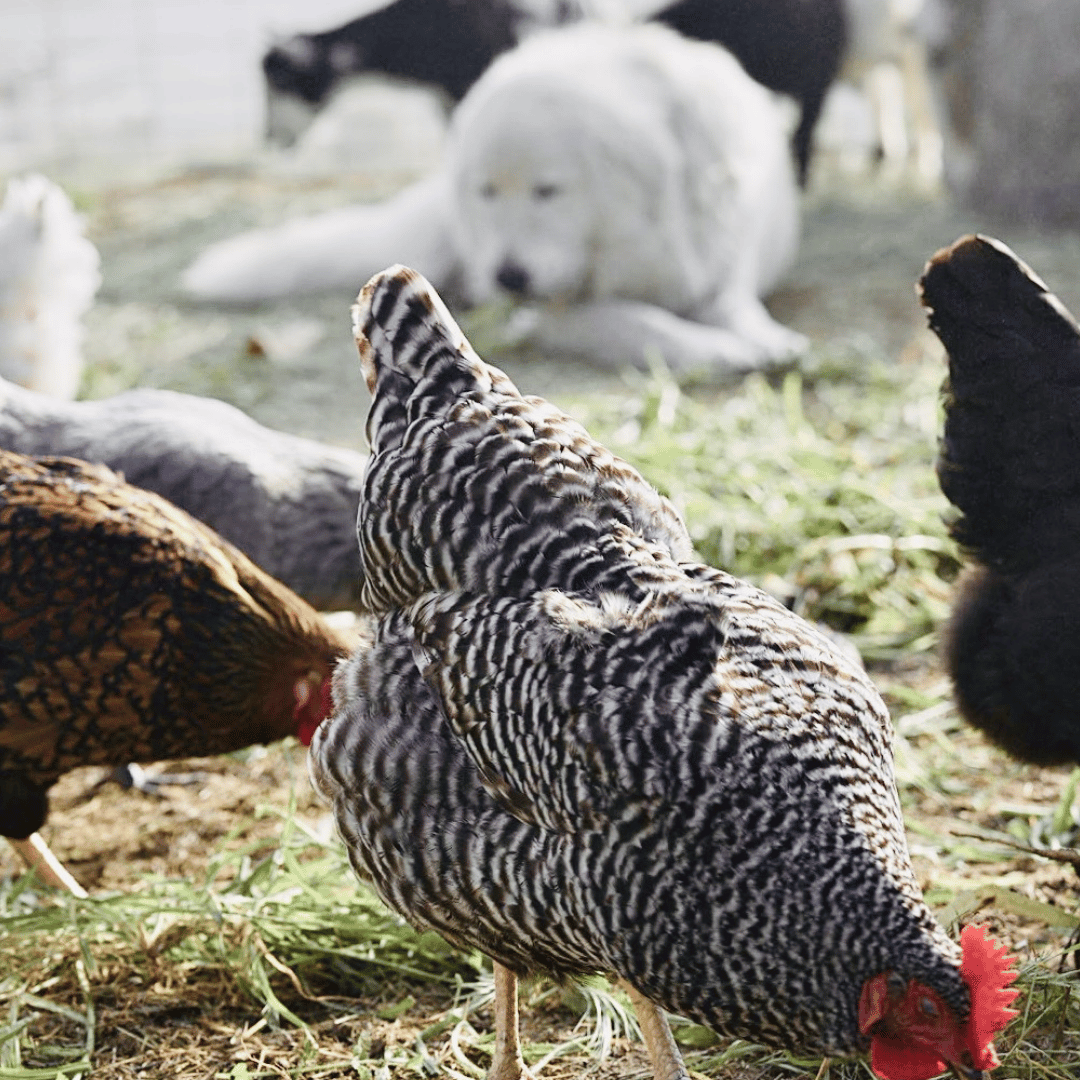
How it Works
Wondering what it’s like to work with a breeder who is also a certified professional trainer? Learn about our processes and how we guide you every step of the way before and after the sale.
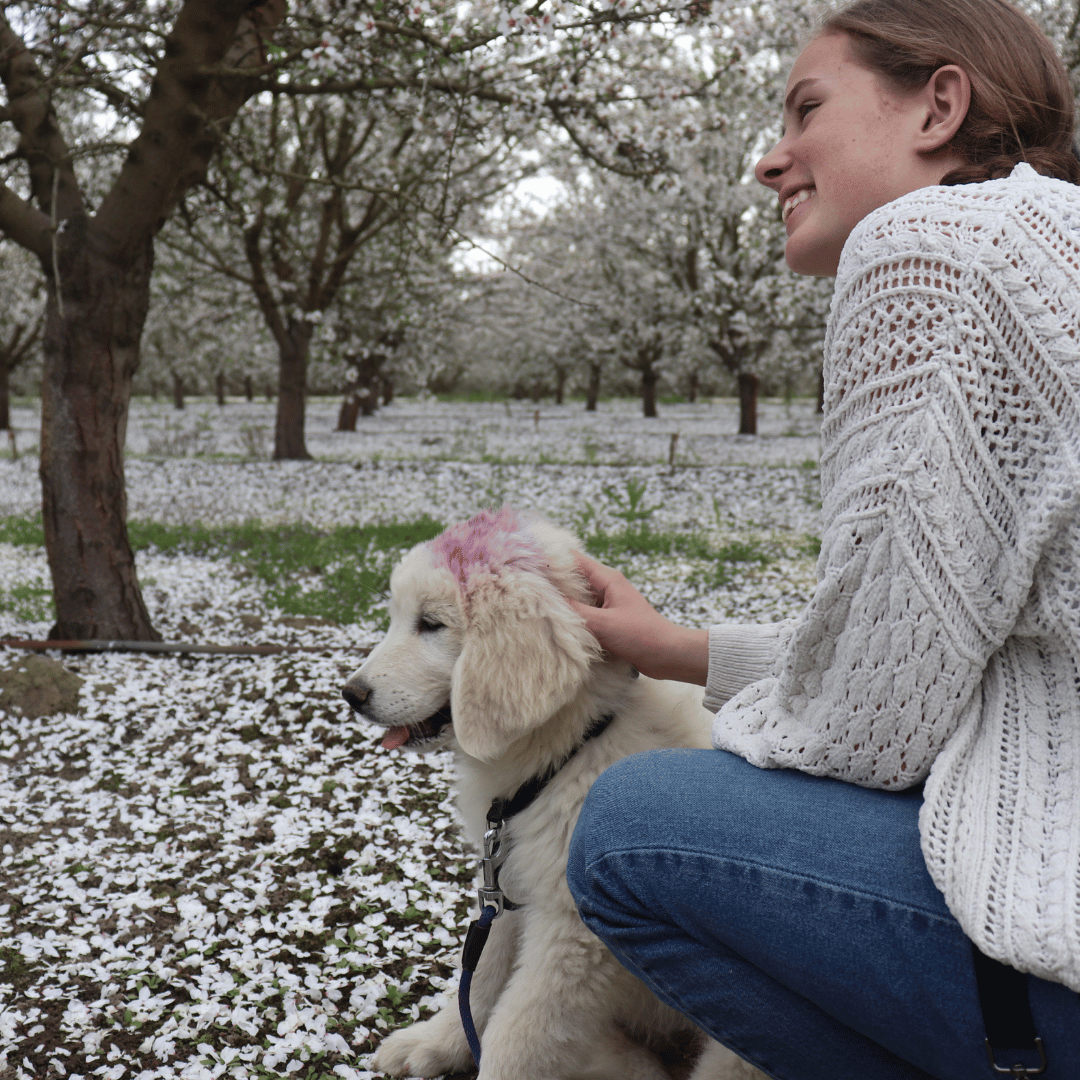
Available Maremmas
Ready for a puppy? In need of an older Maremma? Or planning ahead for the future? Click the link below to see our available pups and dogs and upcoming litters.
Our Foundation for Matching You With the Perfect Maremma Sheepdog
At Prancing Pony Farm, we breed and train outstanding Maremma Sheepdog Livestock Guardians and family companions. Our dogs have the genetics, temperaments and training to excel as trustworthy, dependable Livestock Guardians and family dogs, as well as sound and healthy bodies to withstand the rigors of the job. Our outstanding lifetime client support and virtual training services ensure that your new Maremma will be a joy and a blessing, regardless of the role they play in your life. If this type of relationship is what you want from a Maremma Sheepdog then we have a dog for you!
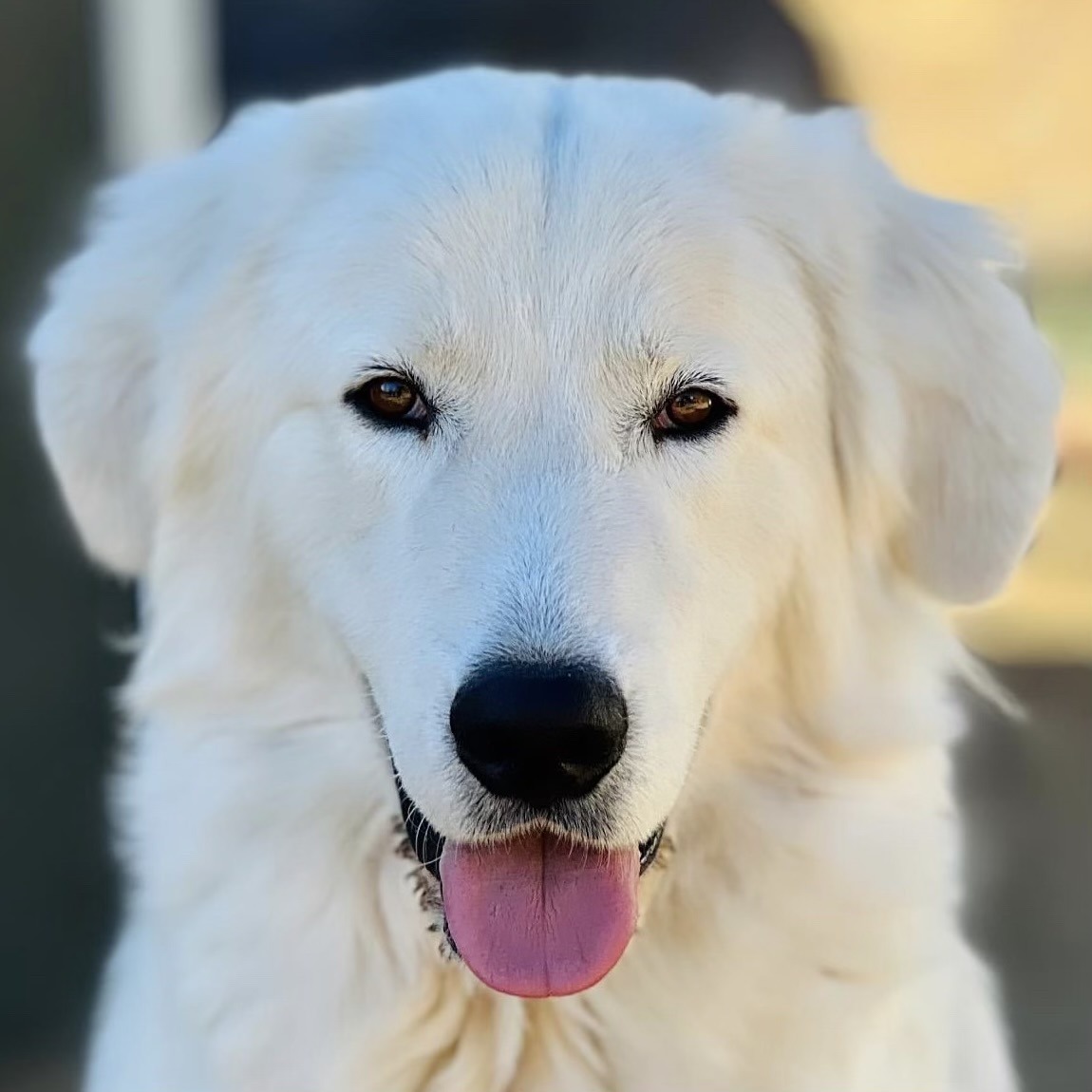
Breed Incredible Dogs
It all starts with breeding incredible dogs. We breed sound, healthy dogs with superior Livestock Guardian abilities who also make devoted family or personal companions. Our dogs thrive on modern farms, ranches, and homesteads, big and small. One of our clients (who bought 2 pups from us in 2019 and 1 in 2021) dubbed our dogs “plug and play” and the term says it all!
Understand & Support Our Buyers
My goal is to see you and your dog thrive together. I invest a lot of time in training and handling my puppies, getting to know them, and understanding the kind of home they would do best in. I am adept at matching the right dog with the right family, whether you need an LGD, a family companion, or a bit of both. Your needs and desires and the well-being of the dogs are at the heart of what I do.
Provide Unparalleled Lifetime Client Support
My responsibility to you isn’t done once you take your puppy home. My outstanding lifetime client support ensures that your new Maremma will be a joy and a blessing, regardless of their role in your life. My extensive background in dog training and behavior and years of experience breeding and training Maremmas enables me to assist you in training your puppy as it matures, so you won’t need to figure things out on your own.
Buying a Maremma Sheepdog From Us is Easy!
Step 1
Sign up for our email list by clicking the link below.
This allows us to send you information on our breeding program, available puppies, and upcoming litters. We will also answer any questions you have and help you decide if a Prancing Pony Maremma is right for you.
Step 2
We will email you a link to our puppy application.
This application helps us match you with the perfect puppy and gives us your contact info for the registration paperwork and microchip.
You can also schedule a phone call directly through this form if you wish.
Step 3
When you’re ready to reserve your pup, you will pay the non-refundable reservation fee.
Then, we will guide you through the rest of the process, including the puppy contract and health guarantee, shipping arrangements, medical records, preparing for your puppy, and ongoing support after you take home your Prancing Pony Farm Maremma.
Join Our Email List!
Sign up for our email newsletter, and we’ll keep you posted on upcoming kidding season and available goats! Our email list members are always the first to know and get first dibs on available goats. We also send helpful dairy goat care articles and links to useful resources.